








The journey to $1 billion in revenue often involves navigating complex markets, but for Gusto, the HR software company, that path has been uniquely defined by its commitment to small businesses. While many enterprise software firms chase large contracts, Gusto’s growth trajectory, confirmed by the company to Fortune, demonstrates a different strategy, serving a sector often overlooked by major tech players. This achievement, reaching over half a million customers, underlines a model that scales through volume and deep engagement with smaller entities.
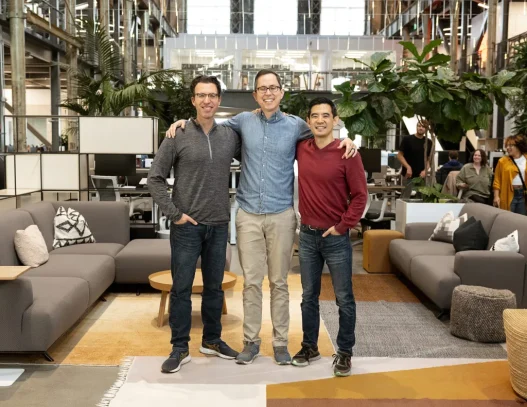
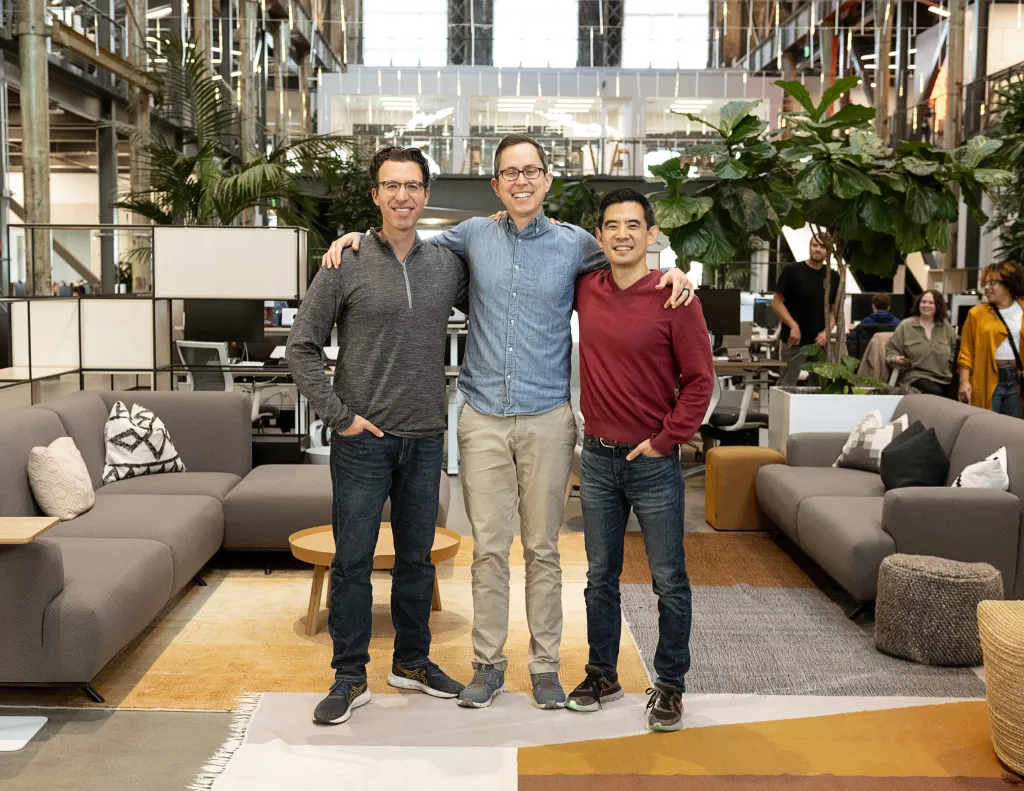
Cofounders Eddie Kim, Tomer London, and Josh Reeves began building what was then ZenPayroll in 2011 from a house in Palo Alto. Their early days were characterized by a lean approach, including a period where Kim reportedly lived in a closet. They famously did not pay themselves until they could process their own payroll through their nascent product. One of their very first customers, Christina Stembel of Farmgirl Flowers, vividly recalls London and Kim personally visiting her at the San Francisco flower market in 2012 to set up payroll for her single employee. Stembel, working since 3 AM amidst rats “as big as cats” in what she described as looking “literally like a murder den,” expressed surprise that the eight-person startup would make such a personalized effort. This early dedication to individual small business owners foreshadowed the company’s future success.
The initial milestone for Gusto wasn’t just about revenue, but about proving the viability of their concept. Josh Reeves highlighted that reaching $1 million in revenue around 2014, with approximately 5,000 customers, was less about the money itself and more about validating the core business risks: could they build a useful, distinctive product, and could they acquire customers cost-effectively and scalably? This period also saw significant growth spurts, with Reeves noting one January where customer additions jumped from 1,000 to 1,500 in a single month, followed by another year where they added 3,000 customers to an existing base of 6,000. Tomer London described this phase as an “interesting psychological shift,” where the founders could no longer personally know every new customer joining their platform.
The transition from $1 million to $100 million in annual recurring revenue marked a critical maturation point for Gusto. By 2019, the company had reached this $100 million mark, serving about 95,000 customers. Reeves characterized this as achieving “unkillable scale,” a state where the business transforms from a simple product people like into a complex “factory” requiring fine-tuning and expansion. This stage demanded significant evolution in how the company approached forecasting, planning, communication, and overall operations. Reeves noted that the amount of change and foundational proof required to hit $100 million far surpassed the growth from $100 million to $500 million, or even from $500 million to $1 billion.
Gusto continued its upward trajectory, reaching $500 million in revenue in 2023 with roughly 300,000 customers before surpassing the $1 billion threshold this past February. The company’s investors have included prominent names such as Ontario Teachers’ Pension Plan, T. Rowe Price, General Catalyst, Fidelity Investments, and CapitalG, underscoring investor confidence in their small business-focused model. This achievement, as Kim articulated, validates that “moving up-market isn’t the end goal for Gusto,” reinforcing their commitment to the foundational market segment they initially served.
Looking ahead, Gusto’s leadership projects continued growth within the small business sector. Josh Reeves anticipates that the company, currently employing around 3,000 people, could serve one million customers with a similar headcount, indicating efficiency gained through scale. The cofounders also express optimism about the future of small businesses, particularly in an era shaped by artificial intelligence. Kim suggests that AI will further lower barriers to starting a business, building on a trend observed over the past 15 years. Reeves offers a more provocative long-term view, positing that if the Industrial Revolution pushed the workforce towards larger corporations, AI could potentially reverse this, leading to a significant resurgence where 80% to 90% of the workforce is once again employed by small businesses, a stark contrast to the pre-AI landscape where half the workforce was in companies with over 500 employees.