
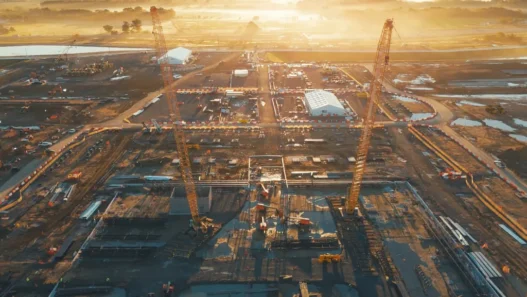





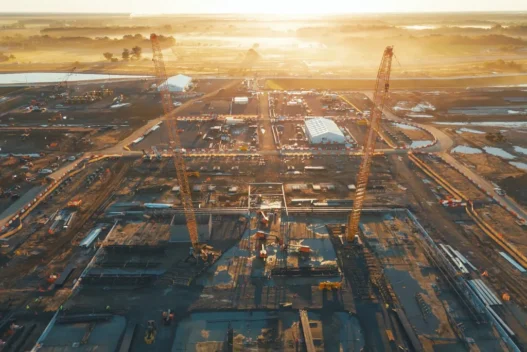
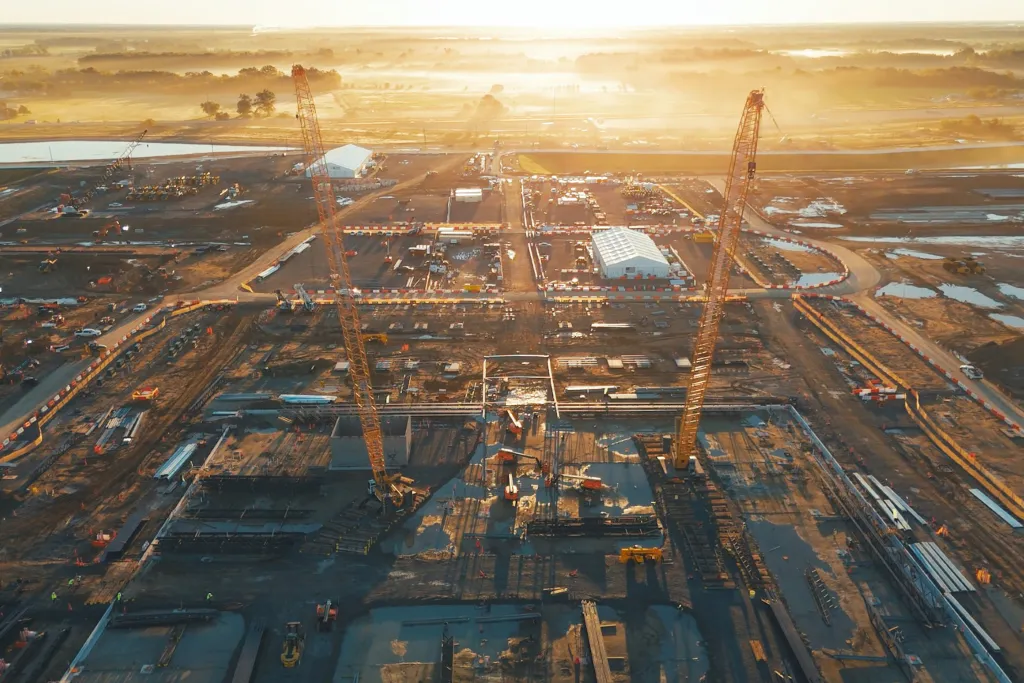
The landscape of Richland Parish, a rural expanse in northeast Louisiana, is undergoing a profound transformation, marked by both opportunity and disruption. Meta’s $27 billion Hyperion AI data center, a sprawling 2,250-acre facility, has introduced an unprecedented influx of activity to a region long accustomed to economic stagnation and population decline. This massive investment, projected to reach $27 billion in total development costs, has created a complex economic ecosystem where some local businesses are thriving, while others struggle to adapt to the sudden changes.
For Tim and Lindsey Allen, the arrival of thousands of construction workers signaled a unique chance. Their venture, Holy Tacos, born from a long-standing family joke, now caters regularly to Mortenson, one of the project’s primary contractors, preparing over 1,600 tacos in a single morning. What began as an aspiration for a food truck quickly evolved into a makeshift restaurant in Rayville, a direct response to the surge in demand. Tim Allen, a church administrator, notes that without Meta, this entrepreneurial leap would likely not have occurred, highlighting the direct economic benefits for some local enterprises. Similarly, Chris Holyfield, owner of Holy Dippers, capitalized on the construction boom by providing septic and eco-friendly restroom services, expanding to 58 units and projecting further growth. His existing restaurant businesses in Monroe also secured catering contracts with Meta’s contractors, demonstrating a wider ripple effect for established businesses with the capacity to scale. GrowNELA, the regional economic development authority, points to firms like ServiceMaster Action Cleaning and Copeland Electric, both of which have seen significant workforce expansion directly attributable to the Meta project, with the latter reporting a 40% increase in hiring.
However, the economic tide has not lifted all boats equally. Katie and Logan Stewart, a couple in their mid-thirties, invested over $40,000 of their savings into Opal’s Orange Food Truck, hoping to serve the burgeoning workforce. Initially, their venture saw success, serving over 100 orders daily. This momentum shifted dramatically when DPR, another major contractor, brought in an out-of-state catering company to feed workers on-site. This decision effectively eliminated the need for many workers to leave the construction zone for meals, significantly impacting local food vendors like Opal’s. The Stewarts, unable to afford the $1,500 to $2,500 monthly fees for new food truck parks closer to the site, saw their daily orders plummet. This situation underscores a tension between corporate logistical needs and the aspirations of small, local businesses hoping to benefit from the economic surge.
The sheer scale of the Hyperion project, the largest data center Meta has built to date, has also generated broader community concerns. While local officials and economic development leaders, like Rob Cleveland of GrowNELA, emphasize the crucial capital injection and thousands of construction jobs, residents express anxieties about the long-term impact. The influx of construction workers, currently numbering around 3,700 and expected to peak at 5,000 or even 8,000, has created an acute housing shortage. This has led to the rapid proliferation of RV parks, some sprawling across 130 acres, and others, like Kayla Caskey’s South Stuart RV Park, smaller family-run operations. While these provide temporary solutions and income for some landowners, they also bring disruptive changes to previously quiet rural roads, with residents reporting increased traffic and infrastructure strain.
The speed with which the Meta deal was finalized, and what some describe as a lack of transparency, has left certain community members feeling sidelined. Major decisions regarding land use, tax incentives, and infrastructure were largely concluded before many residents fully grasped the project’s magnitude. This process has fueled a perception among critics, including local journalist Amber Perez, that the primary beneficiaries are those with existing political and economic connections, rather than a level playing field for all local businesses. The long-term implications for Richland Parish remain a subject of debate. While the construction phase promises a significant, albeit temporary, economic boost, the operational data center will employ a much smaller permanent workforce, estimated in the hundreds. The question for many residents is whether the short-term gains of this massive construction project will translate into lasting opportunities, or if the region will be left with altered landscapes and infrastructure, but without a sustained economic foundation, once the building boom subsides.