







The global semiconductor market is currently grappling with a secondary shockwave triggered by the artificial intelligence revolution. While much of the public discourse has centered on the scarcity of high-end graphical processing units and specialized memory, a more pervasive crisis is emerging within the storage sector. Data center operators and enterprise hardware manufacturers report that the surge in AI infrastructure investment is directly cannibalizing the production capacity of solid-state drives, leading to a sharp increase in market pricing.
The technical root of this problem lies in the shared manufacturing pipelines for NAND flash memory and high-bandwidth memory modules. As technology giants like Nvidia, Microsoft, and Google scramble to secure the specialized memory required for AI training clusters, semiconductor giants such as Samsung and SK Hynix are pivoting their fabrication priorities. This shift has created a vacuum in the supply of high-density enterprise SSDs, which are essential for the massive data ingestion sets that fuel large language models. The result is a tightening market where demand significantly outstrips the available stock of reliable storage solutions.
Industry analysts note that the price escalation is not limited to specialized enterprise gear. Because the raw materials and manufacturing facilities for consumer-grade SSDs and enterprise-grade drives are largely the same, the focus on high-margin AI components is reducing the volume of standard NAND flash entering the wider market. Retailers are already beginning to adjust their pricing for high-capacity consumer drives, with some segments seeing double-digit percentage increases over the last fiscal quarter. This trend represents a stark reversal from the previous two years, during which an oversupply of flash memory led to historic lows in storage costs for the average consumer.
The ripple effects extend beyond simple cost increases. Lead times for large-scale storage orders have lengthened from weeks to months, forcing companies to reconsider their hardware refresh cycles. Organizations that previously planned to move entirely to flash-based storage are now finding those transitions cost-prohibitive in the current economic climate. This has led to a surprising resurgence in orders for traditional mechanical hard drives, as companies look for more affordable ways to warehouse non-critical data while reserving their limited budgets for the high-performance SSDs necessary for active AI workloads.
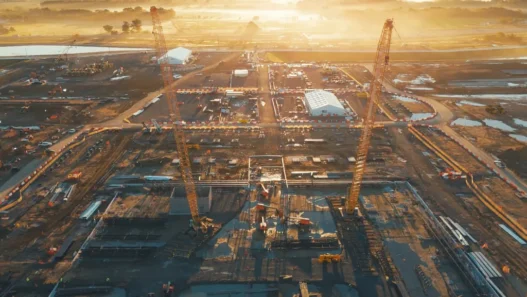
Looking ahead, the road to price stabilization appears long and uncertain. Building new fabrication plants is a multi-year endeavor that requires billions of dollars in capital investment. While manufacturers have signaled their intent to expand capacity, these facilities will not be operational in time to alleviate the immediate pressure. Furthermore, the complexity of AI models continues to grow at an exponential rate, suggesting that the industry’s hunger for high-speed storage will only intensify. Experts warn that unless there is a significant cooling in the AI investment sector, the era of cheap, abundant solid-state storage may be over for the foreseeable future.
For the end-user, this shift necessitates a change in strategy. Early procurement and a shift toward more efficient data management systems have become essential. As the industry recalibrates to prioritize the needs of silicon valley’s latest technological obsession, the rest of the computing world must prepare for a landscape where every gigabyte comes at a premium. The intersection of memory scarcity and storage demand has created a perfect storm, proving that the costs of the AI era are far more expansive than the price of the chips themselves.