






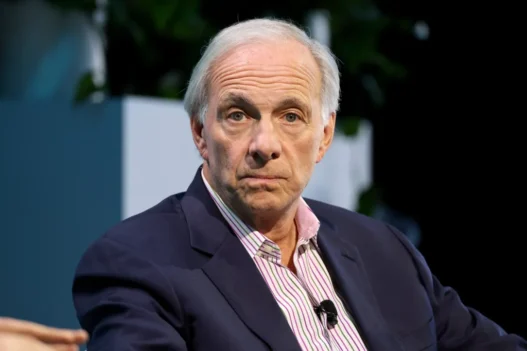
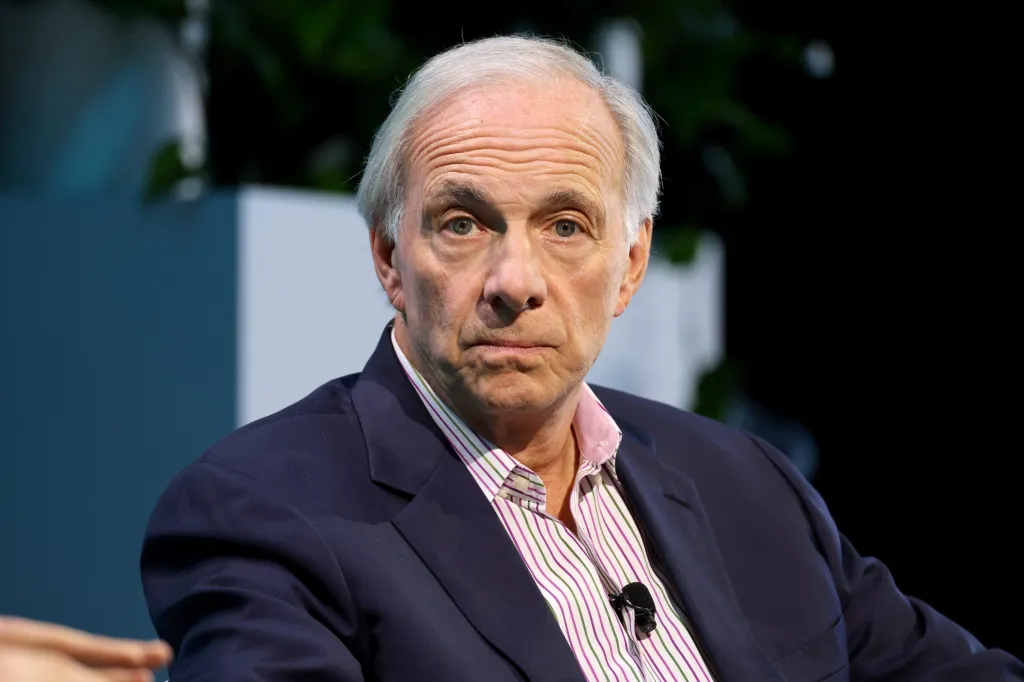
The fate of the Strait of Hormuz, a narrow choke point through which a fifth of the world’s oil supply navigates daily, has become the focal point of an escalating geopolitical confrontation. Ray Dalio, the founder of Bridgewater Associates, recently articulated a stark assessment, suggesting that the ongoing tension between the United States, Israel, and Iran over this critical waterway represents more than a regional dispute; it is a decisive struggle that could fundamentally alter the American-led global order. Dalio posits that the outcome will determine far more than mere fluctuations in oil prices.
Dalio’s analysis, shared through a lengthy post, emphasizes the historical precedent for such pivotal moments. He draws a parallel to Britain’s experience during the 1956 Suez Crisis, an event widely regarded by historians as a significant marker in the decline of the British Empire’s global influence. In Dalio’s view, if Iran manages to assert control or even maintain leverage over passage through the Strait of Hormuz, the United States would be perceived as having suffered a strategic defeat, irrespective of the conflict’s immediate resolution. This scenario, he argues, would signal a weakness in the dominant power, especially one that is, in his frequent assertion, financially overextended. Such a revelation could precipitate a loss of confidence among allies and creditors, potentially jeopardizing the dollar’s status as the world’s reserve currency and leading to a sell-off of U.S. debt assets, alongside a weakening of the currency itself, particularly against gold.
The current situation around the Strait remains fluid and uncertain. For nearly three weeks, the strait has seen severely restricted passage, though some limited vessel movement has reportedly resumed. President Trump’s shifting rhetoric regarding allied support for securing the waterway has added to the complexity. Initially disparaging allies for their perceived inaction, he later asserted that the U.S. required no assistance, proclaiming America’s unparalleled strength. Meanwhile, Iranian Foreign Minister Abbas Araghchi stated that the strait “is open and only closed to enemies,” leaving unresolved questions, particularly concerning unconfirmed reports that Iran may have mined the strait—an action that would represent an irreversible escalation.
Dalio perceives both sides as entrenched in a conflict devoid of a diplomatic off-ramp. He contends that any talk of a negotiated settlement is largely illusory, as “agreements are worthless” in this context. He suggests that the impending phase, whether the U.S. reasserts control or cedes it to Iran, is likely to be the most challenging period of the conflict. The core issue, as Dalio identifies it, lies in a fundamental motivational asymmetry. For Iran’s leadership, this confrontation is existential, deeply entwined with regime survival, national pride, and religious conviction. In contrast, for many Americans, the concerns revolve around gasoline prices, and for U.S. politicians, the focus often drifts to upcoming midterm elections. Dalio clearly indicates which side holds the advantage in a protracted conflict: “In war, one’s ability to withstand pain is even more important than one’s ability to inflict pain.”
Iran’s strategy, according to Dalio, appears to be one of sustained attrition, inflicting pain until the U.S. disengages, mirroring historical precedents in Vietnam, Afghanistan, and Iraq. President Trump has called upon allied nations to participate in a multinational escort operation to secure the strait, though the response from these nations has largely been unenthusiastic. Dalio emphasizes that the efficacy of such an effort as a viable resolution for reopening the waterway remains to be seen.
Should President Trump successfully demonstrate American power by ensuring free passage through the Strait of Hormuz and neutralizing Iran as a regional threat, Dalio believes it would significantly bolster global confidence in both his leadership and U.S. power. Conversely, a failure to do so could trigger widespread repercussions, impacting global trade flows, capital markets, and potentially inflicting irreparable damage on the dollar’s reserve currency status and American hegemony. Adding another layer of complexity, Tehran has reportedly explored options to circumvent the petrodollar’s dominance by agreeing to allow a limited number of oil tankers to trade in yuan rather than dollars for passage through the strait. Both sides, Dalio concludes, understand that the decisive confrontation, which will ultimately declare a victor and a vanquished, is still on the horizon.