








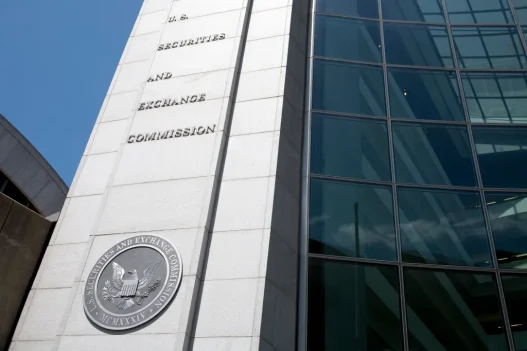

The debate over the future of corporate financial disclosures has drawn significant public input, with thousands of individuals and companies submitting their perspectives to the U.S. Securities and Exchange Commission. At the heart of this discussion is a proposed rule that could allow companies the option to shift from quarterly to semiannual reporting, a move that has ignited strong opinions across the financial landscape. The comment period for this proposal recently concluded, and the sheer volume of responses suggests a deep interest in how companies will communicate their financial health moving forward.
Ohio State University accounting professor Tzachi Zach, who employed artificial intelligence to analyze the incoming comment letters, noted a substantial lean against the SEC’s proposed change. His database, which indexed over 8,000 submissions, revealed that nearly 7,994 explicitly opposed the shift, while only 34 offered support. A further 52 submissions expressed conditional approval. Delving deeper into this dataset, Zach identified 33 letters from individuals in active corporate roles, such as Chief Financial Officers or audit chairs. Within this influential group, 25 voiced opposition, two supported the proposal, and six presented conditional statements. This early sentiment indicates a prevailing caution among corporate finance leaders regarding a potential reduction in reporting frequency.
Among the prominent voices engaging with the SEC was Neil Hansen, Senior Vice President and Chief Financial Officer of ExxonMobil. His extensive 11-page letter, dated June 24, offered support for the SEC’s proposal, advocating for greater flexibility in reporting. Hansen’s argument was not for an end to quarterly disclosures, but rather for companies to have the choice in how they provide this information, specifically diverging from the mandatory Form 10-Q filings. He highlighted the evolving information ecosystem, where investors increasingly rely on a broader array of communications beyond the traditional 10-Q, including earnings releases, investor presentations, and company websites. Hansen underscored that these various channels often provide more timely and emphasized information than the formal quarterly filings.
ExxonMobil’s position also addressed concerns about insider trading policies, asserting that their existing blackout periods are tied to earnings releases, not necessarily the Form 10-Q filings. Should the company opt for semiannual reporting, Hansen stated they would still expect to furnish quarterly financial disclosures through earnings releases via Form 8-K. A key tenet of ExxonMobil’s recommendation is that semiannual reporting should remain entirely optional. The company believes that given the diverse nature of industries, investor bases, and capital needs, businesses should retain the autonomy to determine whether the value provided by quarterly Form 10-Q filings justifies their associated costs. They further suggested an alternative: allowing companies to file abbreviated quarterly financial statements through a new Form 8-K item, rather than requiring the comprehensive 10-Q.
Other finance chiefs also weighed in, offering varied perspectives. Lora Jones, EVP and CFO of National Bankshares, supported the rule, emphasizing its potential to empower companies in selecting reporting options that align with shareholder preferences and optimize reporting resources. Douglas K. Howell, CFO of Arthur J. Gallagher & Co., also expressed support for reducing reporting frequency but introduced a “triannual” reporting framework as a potential middle ground, acknowledging investor concerns about a full shift to semiannual. Conversely, Creighton Early, CFO of Willdan Group Inc., suggested that the true burden lies not in the frequency of reporting but in the depth of disclosure requirements, particularly those related to “arcane and misleading accounting pronouncements.” He stated that reducing the complexity of disclosures, rather than just the number of reporting periods, would offer more meaningful relief.
With the comment period now closed, the SEC staff will undertake the critical task of reviewing these submissions. Their recommendations will guide the Commission on whether to adopt, revise, repropose, or withdraw the rule. Any eventual decision, including an effective date and transition period, would then be subject to a vote by the commissioners, shaping the future landscape of interim financial reporting for public companies in the United States.