




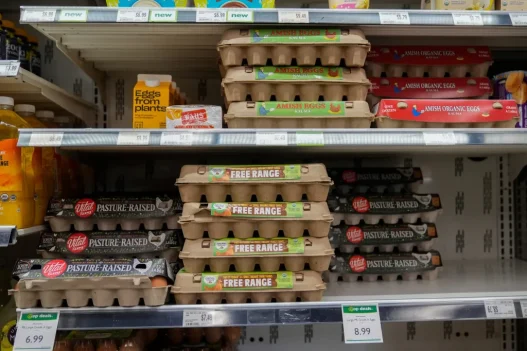
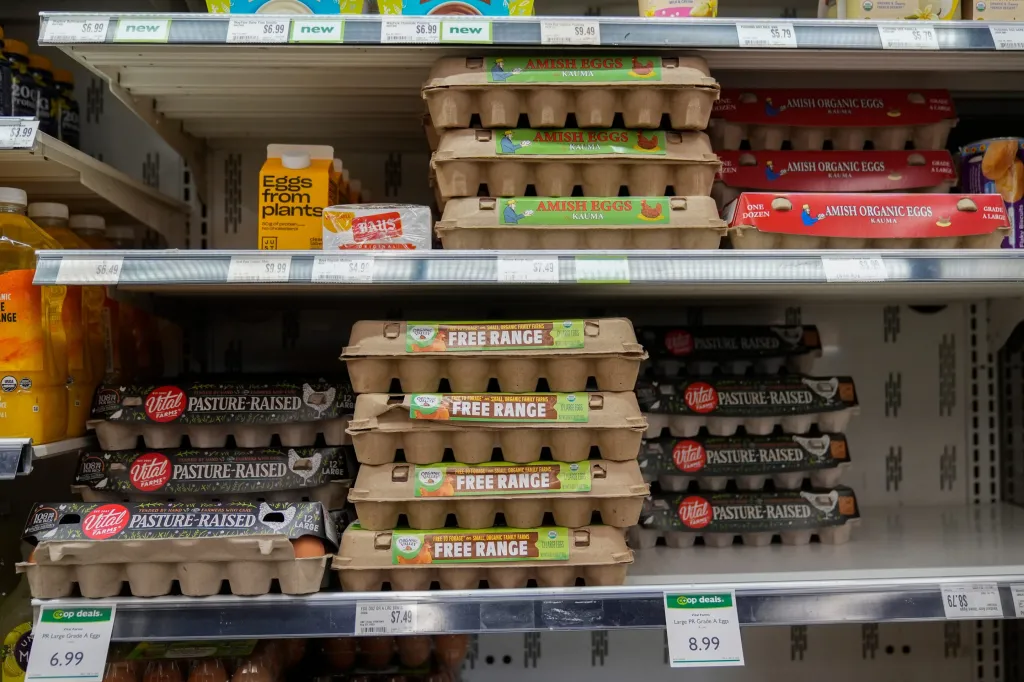
The cost of a dozen eggs soared to unprecedented levels last year, reaching an average of $6.23 in March 2025 across the United States. This surge, while partially attributed to a bird flu epidemic that decimated poultry flocks, also drew the attention of federal and state investigators. Now, major egg producers Cal-Maine Foods, Versova, and Hickman’s Egg Ranch have reached settlement agreements with the U.S. Justice Department and 17 states, addressing allegations of colluding to inflate egg prices between June 2022 and March 2025. These agreements, which still require court approval, include a collective payout of $3.3 million and the donation of 53 million eggs to food banks and nonprofits.
Investigators specifically pointed to the companies’ alleged coordination on bids submitted to Urner Barry Publications, a key index for determining wholesale egg prices. New York Attorney General Letitia James, a lead figure in the investigation, stated that these producers manipulated the market, squeezing additional profits from consumers and businesses. While none of the companies admitted wrongdoing as part of the settlements, the terms include requirements for antitrust compliance programs and a ban on communicating with competitors regarding pricing and bidding strategies. Omeed A. Assefi of the Justice Department remarked that the proposed settlements aim to resolve years of conduct that impacted Americans’ finances.
The timing of price shifts also raised eyebrows. Following the Justice Department’s initiation of an investigation and instructions to preserve documents in March 2025, price quotations reportedly dropped significantly. Consumer egg prices subsequently tumbled, falling below $2.20 per dozen by May 2026, even as the bird flu outbreak continued and flocks were replenished. This sharp decline fueled existing criticisms that large companies might have leveraged their market dominance amidst the supply disruptions.
Cal-Maine Foods, the only publicly traded company among the three, reported a profit of $1.22 billion for its 2025 fiscal year. Under its specific settlement terms, Cal-Maine will contribute $1.5 million and donate 30 million eggs. The company has consistently maintained that allegations of price manipulation are baseless, asserting the legality of its conduct. CEO Sherman Miller acknowledged the period under review as particularly challenging, citing the avian flu, the COVID-19 pandemic, adverse weather, and other market conditions as factors contributing to supply shocks and high prices. Miller emphasized Cal-Maine’s efforts to protect and expand its hen flock during this time and stated that the settlement allows the company to focus on delivering affordable, high-quality eggs.
Versova echoed similar sentiments, highlighting the severe impact of the bird flu on its farmers and noting that the company does not dictate wholesale egg prices. Instead, Versova explained that the cost of most of its eggs fluctuates with grain prices, which are used for hen feed. Its portion of the settlement includes 20 million eggs and $800,000. Hickman’s Egg Ranch, acquired by Mantiqueira USA in November, stated that the conduct referenced in the complaint predates its acquisition, underscoring its commitment to legal compliance. Hickman’s is slated to provide 3.25 million eggs and $1 million.
However, not everyone views the settlements as sufficient. Advocacy groups like Farm Action have voiced concerns, with president Angela Huffman noting that consumers faced record prices while dominant egg producers reported extraordinary profits. Huffman suggested that such settlements might be perceived by corporations as merely a cost of doing business rather than a meaningful form of accountability. The 17 states involved in these agreements include Arizona, California, Colorado, Connecticut, Florida, Hawaii, Iowa, Maryland, Minnesota, New York, North Carolina, Ohio, Pennsylvania, Texas, Utah, Vermont, and Wisconsin, signifying a broad, coordinated effort to address these market practices.