







The numbers are staggering. In the coming five years, an estimated 100,000 satellites will need to be constructed. This projection has prompted a unique collaboration between two seemingly disparate industries: automotive racing and aerospace. Toyota Racing Development (TRD), the engineering arm behind Toyota and Lexus race cars, has partnered with Los Angeles-based Apex, a startup focused on mass-producing satellites. This alliance aims to leverage the rigorous demands of high-performance racing to revolutionize satellite manufacturing, addressing a critical need for scale and reliability in orbit.
Jim Adler, founder and general partner at Toyota Ventures, the automaker’s early-stage venture arm, initiated the conversation in 2024. He approached Ian Cinnamon, co-founder and CEO of Apex, with an intriguing proposition: could TRD’s expertise in building race cars, including those for NASCAR, be applied to fabricating satellite components? Cinnamon, whose career has been dedicated to the intricate challenge of mass-producing satellites, quickly recognized the potential synergy. His company, Apex, founded in 2022, operates on the principle of integrating automotive manufacturing skills into satellite production. The core idea revolves around the understanding that both race cars and satellites operate in unforgiving environments where even minor miscalculations can lead to catastrophic failures.
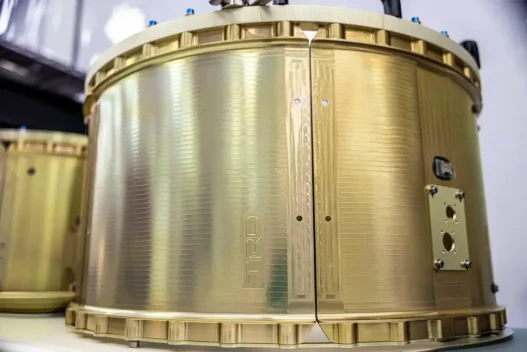
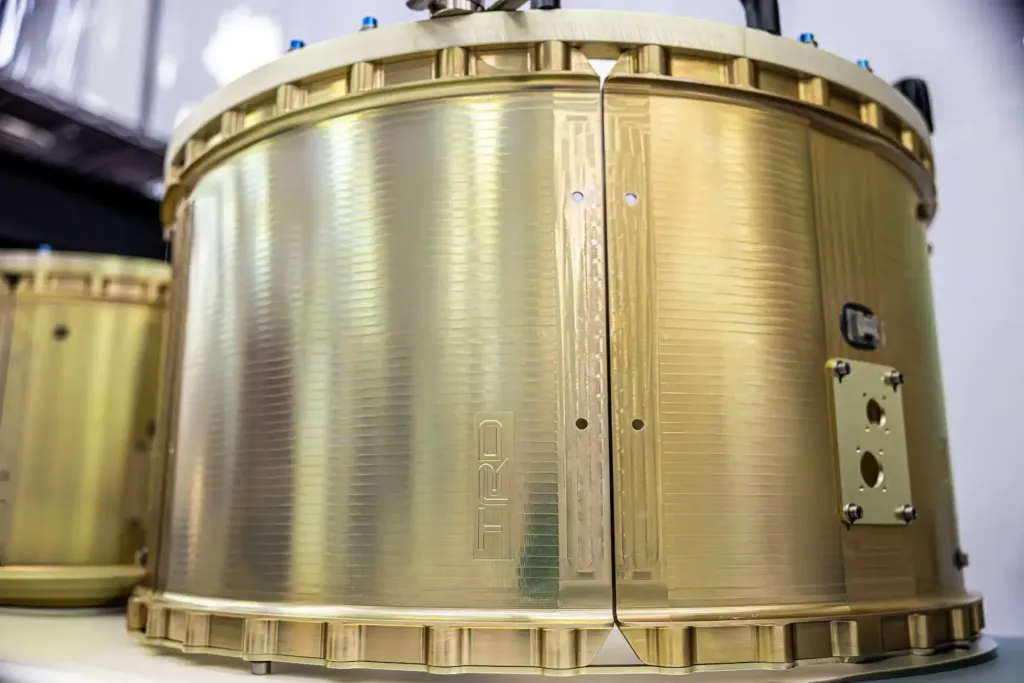
Jack Irving, general manager of Toyota Racing Development USA since 2010, found an unexpected philosophical alignment with Apex’s vision. He highlighted the shared imperative for absolute precision. “If there’s ever an issue with our engine, it’s a pretty big deal,” Irving stated, drawing a direct parallel to the consequences of a satellite malfunction in orbit. TRD’s involvement, which began in 2025, focuses on producing structural elements for Apex’s satellites. This includes vital parts like top decks, base decks, bulkheads, pass-through cylinders, and other smaller components that demand what Irving describes as “ridiculous tolerances.” The partnership represents a first-of-its-kind space mobility venture for Toyota.
Cinnamon has long been a critic of traditional aerospace manufacturing, which he views as overly reliant on low-volume, bespoke production methods. He argues that the future demands satellites that are standardized, high-quality, and produced at a scale closer to that of automotive vehicles. TRD, in his estimation, occupies an ideal middle ground. Race car manufacturing adheres to a significantly higher quality bar than standard automotive production, yet it still operates at a much greater volume than typical aerospace manufacturing. This sweet spot, according to Cinnamon, provides the perfect blueprint for Apex’s ambitions. The precision required in racing, where hundredths or even thousandths of a second can determine victory, translates directly to the exacting standards needed for space hardware.
Beyond the immediate collaboration, this partnership signals a broader strategic direction for Toyota. Adler has identified space as a significant growth area, noting that “with 100,000 satellites that need to be built over the next five years, it’s not just what space can bring to automotive, but what the automotive industry can bring to the space industry.” He even suggested that space could become the next frontier of mobility for Toyota. This perspective also touches upon larger national questions regarding the revival of onshore manufacturing. Cinnamon emphasizes a necessary intellectual shift in manufacturing philosophy, moving beyond simply asking “can we build it?” to considering quality, speed, and affordability simultaneously. He believes that by finding this balance, the U.S. manufacturing base can regain its competitive edge.
The investment by Toyota Ventures, sourced by Chris Abshire, in Apex in 2023, which valued the company at $2.3 billion, underscores the seriousness of this strategic pivot. The alignment between the high-stakes world of auto racing and the unforgiving vacuum of space reveals a shared ethos of engineering excellence, where meticulous attention to detail and robust manufacturing processes are not merely advantageous, but absolutely essential for survival and success.