




The United States has spent the past month looking like a country under quiet siege. It began with a Pentagon effort to prepare military bases for prolonged isolation and was followed by a global hacking spree, a tech-driven market crash, the downfall of one of Silicon Valley’s most celebrated chief executives, and a nationwide halt to air travel.
The cumulative effect has left Americans unusually anxious about the fragility of the systems they depend on, from power grids and software networks to financial markets and airport control towers.
FORTRESS
On September 30, the Pentagon launched an initiative called FORTRESS. The programme is designed to ensure that every major US military base can operate for 90 days without outside support if a war severs power lines and supply chains.
The plan calls for portable nuclear reactors, large-scale battery storage, microgrids that can disconnect bases from civilian power networks, and strategic stockpiles of munitions, fuel, critical minerals, electronics, spare parts and medical supplies. The project reflects growing Pentagon concern that great-power conflict could target the logistics networks that keep American forces operational.
Black October
Within days of the FORTRESS announcement, a wave of cyberattacks began hitting companies and institutions around the world. The Federal Election Commission, Sony, John Deere, Oracle Health, Burger King Japan and the State Bank of India were among the targets. The hacking spree was so widespread that security researchers dubbed it “Black October.”
Cyberattacks even reached industrial freezers across Europe and at US military bases, with temperatures raised high enough to spoil frozen food. France blamed the freezer hacks on Iran, which had vowed to retaliate against the United States and its allies over the war against the regime.
The NSA also warned about vulnerabilities in PHP, the programming language used in roughly 70% of websites, saying attackers could use the flaws to take control of web servers. The month reached a crescendo when North Korean hackers carried out the largest cryptocurrency heist in history, stealing $6.3 billion from Binance.
Political and market turmoil
The disruption was not limited to cyberspace. US voters delivered a sharp rebuke to President Donald Trump and the Republican Party in midterm elections, with Democrats winning races in traditionally Republican territory. Several candidates who campaigned against data centres were among the winners, raising questions about the AI infrastructure boom that has driven growth in recent years.
After an initial post-election rally, stocks tumbled. The Nasdaq 100 posted its worst single-day drop since March 2020 on November 5, with technology companies leading the decline. The losses were the worst for major indexes since Trump’s “Liberation Day” tariff shock in April 2025.
The Nvidia spy scandal
Last weekend, Jensen Huang admitted to having an affair with a woman suspected of being a Chinese spy. After reports of a separate affair with an Nvidia employee surfaced, Huang stepped down as chief executive of the AI chip giant he co-founded. Nvidia shares plunged on fears of tighter export restrictions and uncertainty about leadership at a company that had become the most valuable in the world.
The scandal also focused attention on China's industrial espionage efforts and their potential impact on the AI race, which many officials view as central to future economic and military power.
Microsoft outage and FAA ground stop
On Thursday, Microsoft's suite of software tools went offline, shutting down email, calendars, collaboration platforms and AI functions for users around the world. The company attributed the outage to a network capacity upgrade that had surfaced after a recent network change, not a cyberattack.
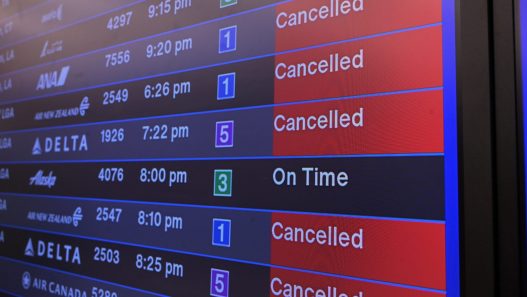
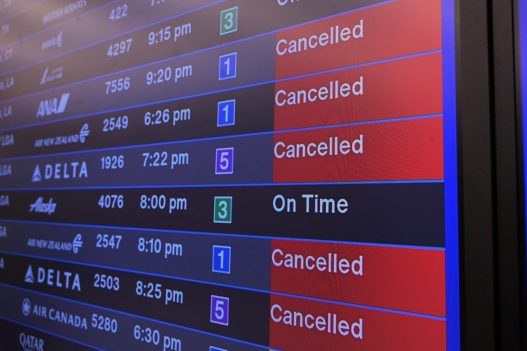
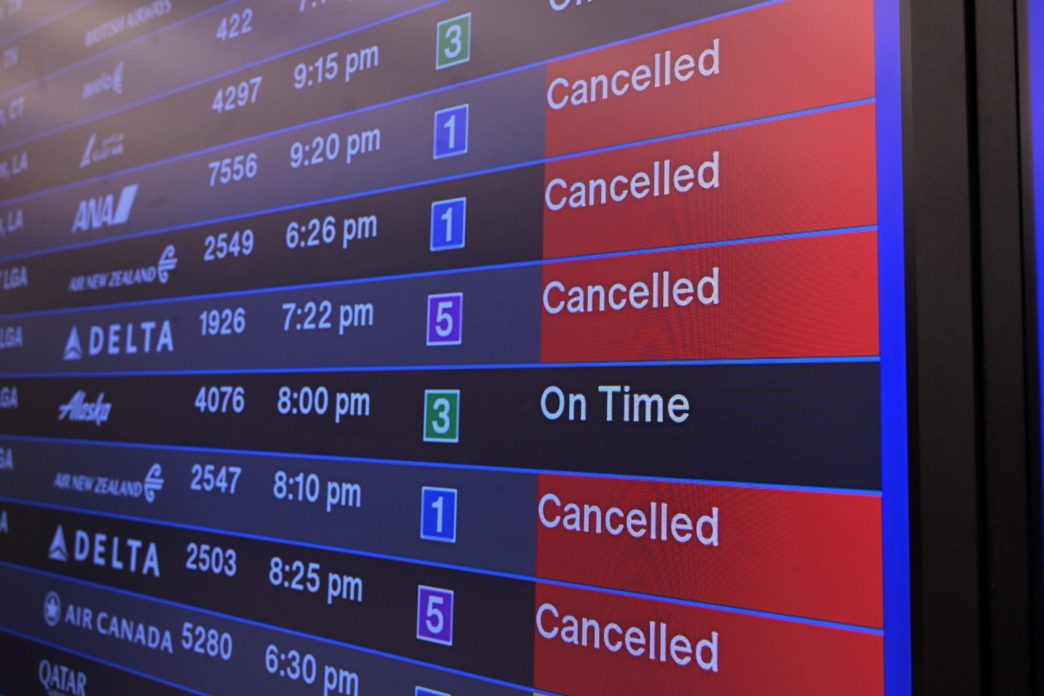
Many workers suspected the Microsoft failure was linked to a Federal Aviation Administration order on Friday that grounded all flights at US airports. The FAA later said the ground stop was caused by an upgrade from copper wire to fiber-optic cable at a communications node in Arkansas, which flooded routers with more than 1,000 connection attempts every four to five seconds. The order was lifted after about four hours.
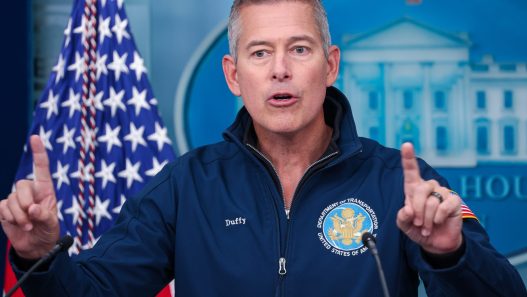
The White House situation room and national security agencies held a call to compare notes. Transportation Secretary Sean Duffy said officials saw no digital footprints associated with a cyberattack, though he did not completely rule one out.
Public unease
The overlapping crises have rattled ordinary Americans. At Newark Liberty International Airport, a stranded traveler told the Associated Press that "there's a lot of weird stuff going on" and wondered whether it was all part of an attack. Another passenger at Chicago's O'Hare airport told the AP the week's events made her feel afraid and helpless.
The UK government added to the mood of precaution by urging Britons to keep canned food, bottled water and cash on hand to survive three days of disruption.
What it means
The Pentagon's FORTRESS initiative and the events that followed it point to the same conclusion: modern societies are deeply interconnected, and the systems that make them rich and efficient also make them vulnerable. Whether the threat is military, digital or technical, the margin for error is shrinking.
For investors, policymakers and the public, the lesson is that resilience is becoming a national priority. The question is whether the institutions responsible for that resilience can keep pace with the risks they are now being asked to manage.