






Air traffic across the United States was halted for roughly four hours on Friday after a failure in the Federal Aviation Administration’s communications network, triggering a multi-agency review that has not yet ruled out every possibility including cyber sabotage.
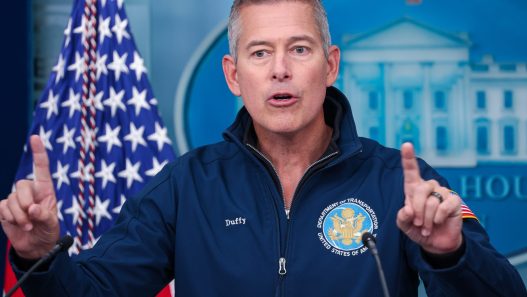
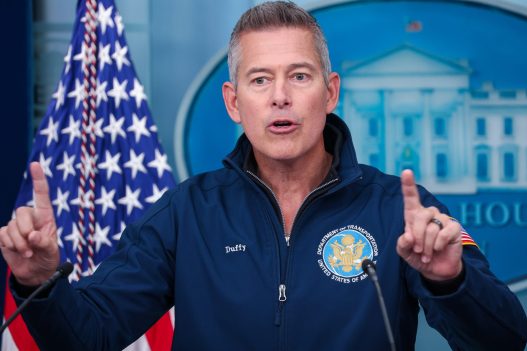
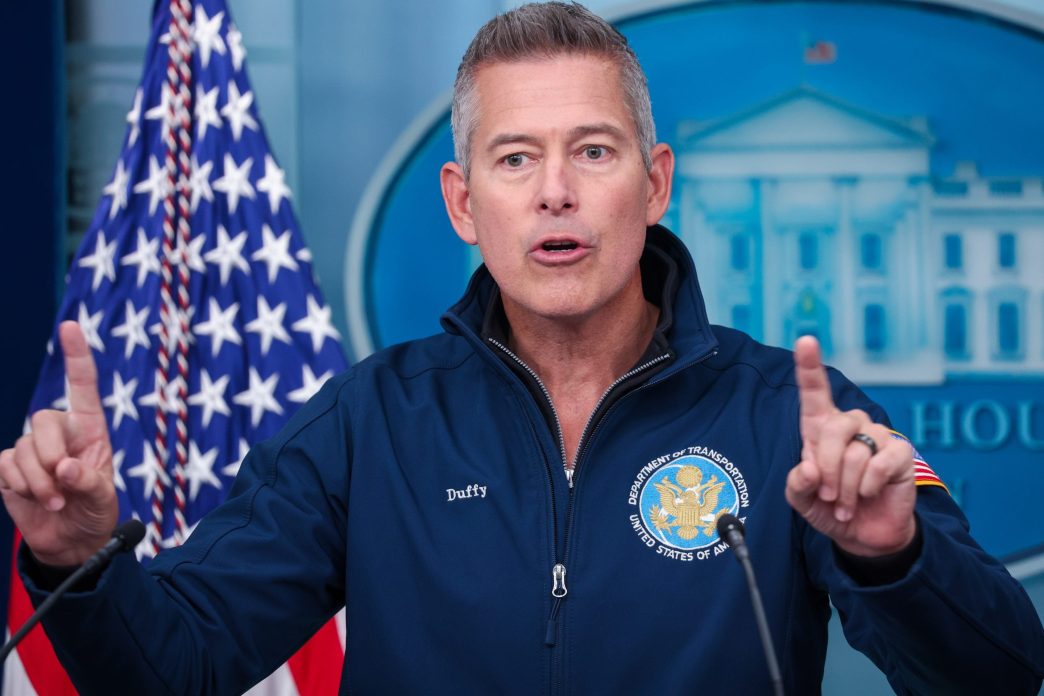
Homeland Security Secretary Markwayne Mullin told reporters on Friday evening that the disruption “doesn’t appear” to have been a cyberattack, but added that “there’s nothing certain right now.” Transportation Secretary Sean Duffy was more definitive on Saturday, saying officials felt “pretty comfortable” the cause was an internal network issue rather than an outside hack.
What went wrong
The FAA has focused on a contractor-led upgrade of communications lines. L3Harris, the defence contractor modernising parts of the National Airspace System, was switching a legacy copper wire line to a fiber-optic cable at a facility in El Dorado, Arkansas. The changeover caused routers across the air traffic control network to be flooded with more than 1,000 connection attempts every four to five seconds, according to Duffy.
Because some radar feeds were disrupted, the FAA issued a nationwide ground stop to ensure safety. The order was lifted about four hours later after controllers confirmed systems were stable. The Arkansas router has since been moved to an L3Harris laboratory in Florida, where FAA and FBI personnel are examining it.
Why a cyberattack has not been ruled out
Despite the public reassurances, federal investigators are still examining whether any outside actor played a role. Duffy said the director of national intelligence, the National Security Agency, the FBI and the Cybersecurity and Infrastructure Security Agency joined a call with intelligence partners after the problem emerged. They did not see the usual chatter or digital footprints associated with a hack, he said, but the probe continues.
“We feel pretty good still today that it is not a hacking event,” Duffy told ABC’s This Week. “But if the FBI comes in and says ‘no, we found something,’ obviously we’ll share that with the American people.”
A second router raises questions
While investigators focus on Arkansas, a separate router in Amarillo, Texas also began behaving unusually. That upgrade had been completed weeks earlier, Duffy said, but the device started broadcasting data into the FAA network at the same time as the Arkansas failure. Both routers are now at the Florida lab.
ABC asked Duffy whether sabotage had been ruled out. He replied that officials were “looking at a full suite of issues with the router and with the installation.” The technician who performed the Arkansas work is known to authorities and is believed to be a veteran. Duffy called him a “good American patriot” and said there was no indication of deliberate sabotage during installation.
L3Harris response
L3Harris said it has been modernising the National Airspace System's communications infrastructure in coordination with the FAA and has completed more than 70% of the conversion from copper to fiber optic. The company said it is supporting the investigation into the conditions that led to the ground stop.
"L3Harris takes the nationwide ground stop and its impact on travelers, airlines and air traffic operations seriously," a spokesperson said in a statement on Saturday.
Political and operational fallout
The disruption is one of the most significant aviation system failures in recent years. It delayed thousands of flights at a time of high passenger volumes and renewed questions about the resilience of the infrastructure that underpins US air travel. Lawmakers are expected to demand briefings on both the immediate cause and the broader state of FAA modernisation.
The episode also highlights the risks involved in upgrading critical systems while they remain in operation. Converting decades-old copper lines to fiber optics is necessary to improve capacity and reliability, but doing it without disrupting a network that handles tens of thousands of flights each day requires careful coordination.
What comes next
Officials say air traffic has returned to normal, but the root-cause investigation is only beginning. The FBI is offering technical assistance, and multiple intelligence agencies remain engaged. If the failure is traced to equipment or installation, the FAA and L3Harris will face pressure to show that similar switches at other sites will not cause repeats.
If investigators find evidence of outside interference, the incident would become a major national security issue. For now, the government is treating it as a serious technical failure while keeping the door open to other explanations.