


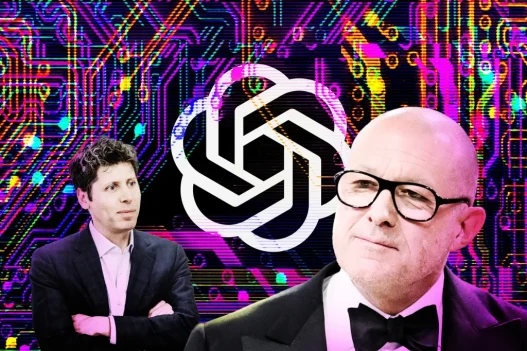
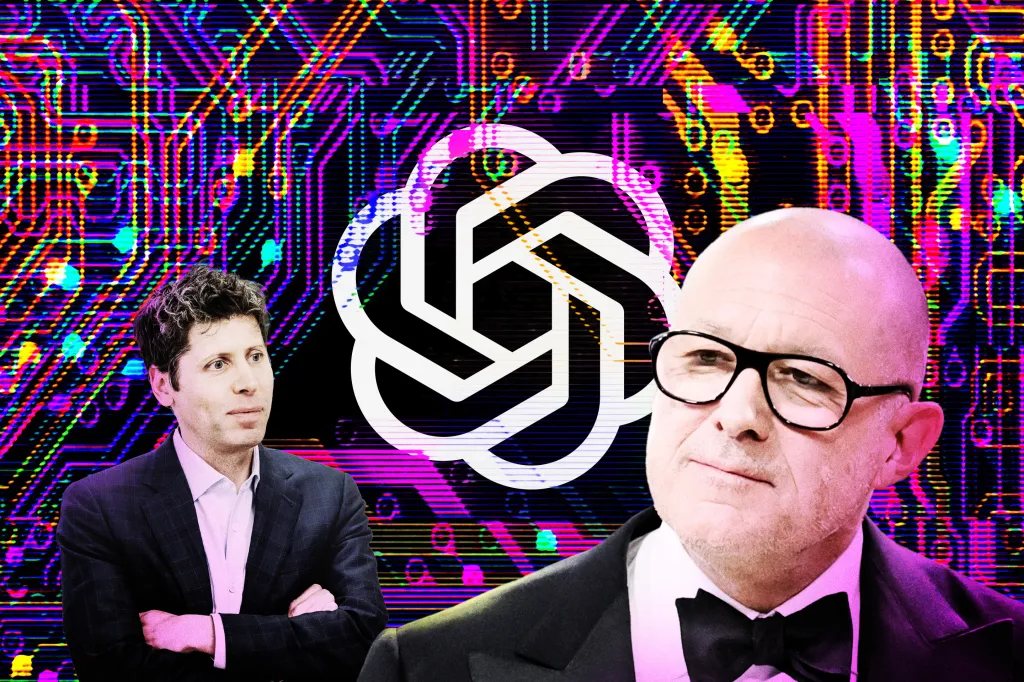
The future of OpenAI’s ambitious foray into consumer hardware, spearheaded by CEO Sam Altman and renowned designer Jony Ive, now hangs in the balance following a significant lawsuit filed by Apple. This legal battle, which alleges trade secret theft, casts a shadow over the partnership formed just over a year ago when OpenAI acquired Ive’s hardware startup, io Products, for $6.5 billion. The alliance aimed to leverage Ive’s legendary design prowess, honed during his tenure creating iconic Apple devices like the iPhone, to build a new class of AI-powered gadgets.
Their collaboration, announced publicly in May 2025 with a viral video featuring Altman and Ive at a North Beach cafe, signaled a clear intent to challenge established tech giants. OpenAI, the company behind ChatGPT, seeks to embed its AI models directly into consumer products, thereby controlling the user experience and potentially mitigating the risk of competitors limiting access to its technology. This strategic move into hardware is not merely about launching a new gadget; it represents a critical evolution for OpenAI, an organization that, at 11 years old, no longer holds an undisputed lead in large language models. For them, hardware offers a pathway to user lock-in, ensuring continued relevance even if their foundational AI models face increasing competition.
The initial device from this partnership, rumored to be a home-speaker-like AI companion with moving mechanical parts mimicking human behavior, is anticipated to ship as early as next year. While the design for this inaugural product is reportedly finalized, the broader family of AI devices remains under development. However, entering the hardware market without a track record is inherently challenging, a reality that has already seen other AI-first device startups burn through vast sums of investor capital with little to show for it. The additional hurdle of a lawsuit from Apple, alleging that more than 400 former Apple employees now at OpenAI unlawfully took confidential data related to vendors, supply chains, and unreleased hardware, significantly complicates an already complex undertaking. OpenAI, for its part, has stated it possesses no evidence supporting Apple’s claims and upholds the principle of fair competition and employee mobility.
Jony Ive’s involvement extends beyond the acquisition; he is spearheading the project, collaborating closely with the now 400-plus strong OpenAI hardware team, which operates from the original io building in San Francisco’s Jackson Square. Though not a direct OpenAI employee, Ive’s design firm, LoveFrom, provides critical design services, shaping the aesthetic for the entire family of devices. This collaborative structure, blending top talent in industrial design and mechanical engineering from multiple organizations, brings immense potential but also inherent risks of clashing visions and operational inefficiencies. Ive, known for his meticulous design discipline and deep commitment to projects bearing his name, has a reputation for pushing boundaries to achieve product perfection. Associates describe him as laser-focused once engaged, a quality that will be tested as he navigates the complexities of a new company and a legal challenge from his former employer.
The personal connection between Altman and Ive, with Altman having met Ive’s family and Ive’s son reportedly encouraging the initial meeting, suggests a genuine rapport. Yet, the question remains whether this partnership can replicate the magic of Ive’s nearly 15-year collaboration with Steve Jobs. OpenAI, preparing for a potential IPO and locked in fierce competition, has numerous priorities vying for its leadership’s attention, including Altman’s own controversial history, which includes a brief firing in 2023. These factors could influence consumer trust, especially for devices rumored to record users within their homes. Critics like Gary Sheng, founder of Hyperagent Labs, suggest that even a beautifully designed object will not overcome a trust deficit, underscoring the importance of transparent privacy practices and the performance of OpenAI’s voice technology.
Beyond the reported speaker device, industry speculation, including reports from analyst Ming-Chi Kuo, suggests OpenAI might be exploring a smartphone where AI agents replace traditional apps, as well as AI glasses and an AI pin. Such devices represent a broader industry race, with Apple, Meta, and Google also striving to fuse AI and hardware into the next essential gadget. However, the path is fraught with failures, as evidenced by the spectacular flops of highly hyped, AI-first devices like the Rabbit r1 and the Humane AI Pin, the latter developed by former Apple employees. The legal battle with Apple, while unlikely to halt OpenAI’s hardware ambitions entirely, could force the company to re-engineer aspects, abandon suppliers, or quarantine employees, according to intellectual property law professor Saurabh Vishnubhakat. Such delays, at a time when AI devices are still in their nascent stages, could prove costly for OpenAI as it strives to build not just a product, but an entirely new paradigm for consumer technology.