







The valuation for HappyRobot, a company specializing in AI agents for supply chain logistics, recently soared past the ten-figure mark, reaching $1.2 billion. This financial milestone follows a substantial $150 million Series C funding round, co-led by Prysm Capital and Eurazeo. Additional significant investments came from Bankinter, Kfund, Koch Disruptive Technologies (KDT), Orange, and T Capital (Deutsche Telekom), signaling broad confidence across diverse investment sectors. Despite this rapid ascent, co-founder Pablo Palafox maintains a perspective that the company is merely “getting started.”
HappyRobot’s growth trajectory has been remarkably steep. This latest funding arrives less than a year after a $44 million Series B round, which itself succeeded a $15.6 million Series A in December 2024, led by a16z. The company reports revenue growth exceeding five times since the Series B, alongside a net dollar retention rate above 150%. Palafox cited examples of this expansion, including one major U.S. supply chain client whose contract grew tenfold within a year, while other clients increased their commitments by up to five times. This aggressive expansion underscores the perceived value of their AI-driven solutions in a demanding industry.
The core of HappyRobot’s offering lies in its autonomous AI agents, which move beyond traditional chatbots. These agents are designed to perform actual work, from negotiating with truck drivers and scheduling appointments to managing customer support from start to finish. The company initially carved out its niche in logistics, securing major enterprise clients such as DHL, Uber, Kuehne + Nagel, Naturgy, and Repsol, among over 150 others. HappyRobot is now actively expanding its footprint into new sectors including telecom, energy, utilities, airlines, and financial services, targeting a broader segment of the enterprise AI agents market, which analysts project could reach $295 billion by 2035.
Pablo Palafox’s journey to co-founding HappyRobot involved a background in computer vision and autonomous systems research at Meta’s Reality Labs. However, he emphasizes that the true breakthrough for the company came not from theoretical research but from direct observation. By sitting alongside operators at customer sites, Palafox and his team gained practical insights into the nuances of daily operations, allowing them to develop AI solutions that genuinely address real-world challenges. This hands-on approach proved more critical than his academic background in shaping the company’s product.
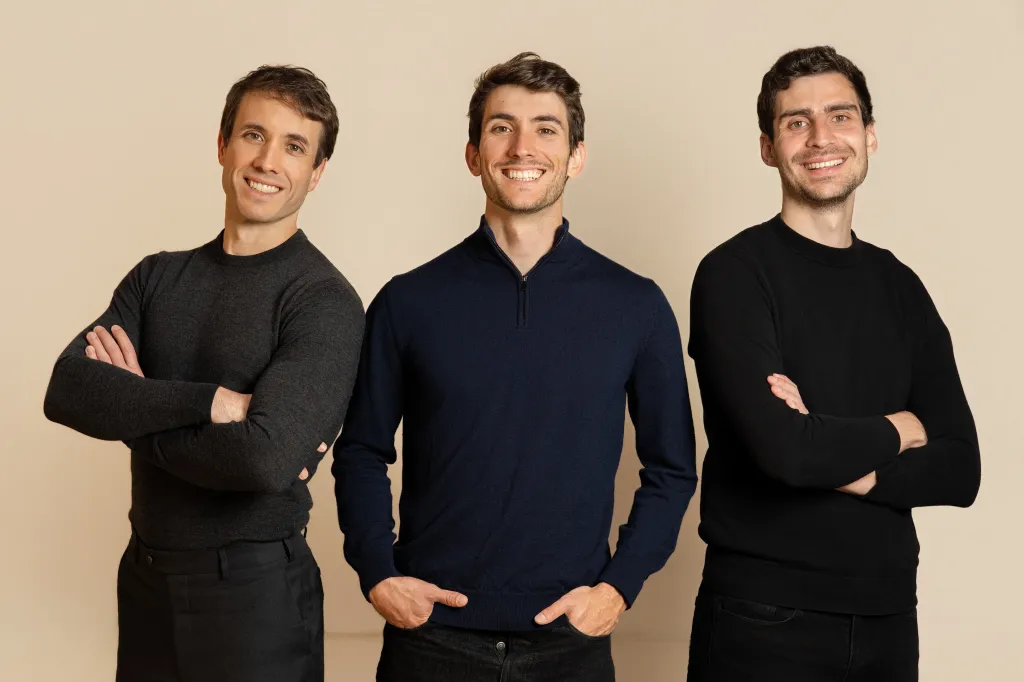
The founding team, which includes Palafox’s brother Javi and co-founder Luis Paarup, met in Spain in 2012. Their responsibilities remain largely as they were at inception: Paarup oversees product and engineering, Javi handles operations and early sales, while Pablo focuses on deployments and customer-facing activities. This division of labor has been instrumental in navigating the complexities of scaling a technology company. Anish Acharya, a general partner at a16z and a HappyRobot board member since the Series A, highlighted the company’s ability to evolve into a horizontal platform by first tackling a particularly difficult problem: enabling AI to negotiate freight prices accurately without “hallucinating” or generating incorrect information, a critical issue where even minor errors could have significant financial repercussions.
New investor Kerry Wei of Prysm Capital, who led her firm’s investment, pointed to unanimous positive customer feedback and the founding team’s grounded approach as key factors in her decision. She noted their refreshing lack of pretension, suggesting that HappyRobot distinguishes itself by focusing on practical solutions rather than merely projecting a “cool AI startup” image. This emphasis on tangible results and customer satisfaction appears to be a significant driver behind their rapid success and increasing market valuation.