
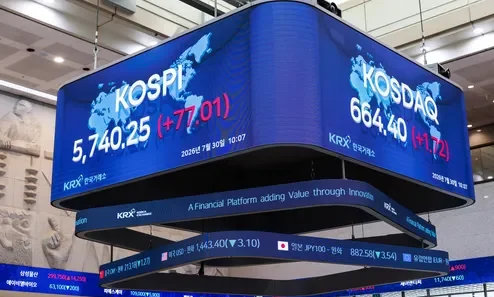




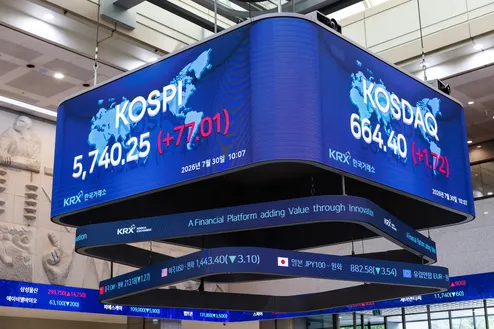
Goldman Sachs has cut its 12-month target for South Korea’s Kospi Index by 25%, lowering the figure to 9,000 from 12,000, as mounting concerns over AI-related investment weigh on the bank’s outlook for Korean equities.
Strategists led by Timothy Moe made the cut after repeatedly raising the target earlier in the year, a sharp reversal that comes after the benchmark had already plunged more than 35% from its June peak.
South Korea’s market has proven especially exposed to the AI trade unwind because of its heavy weighting toward semiconductor giants Samsung Electronics and SK Hynix, both of which had benefited significantly from surging demand for memory chips used in AI infrastructure.
Rising financing costs, massive infrastructure spending commitments and growing uncertainty over the eventual returns on AI investment have combined to trigger widespread selling across Korean equities in recent months.
Despite the downgrade, Goldman's revised 9,000 target still implies upside of more than 60% from current levels, reflecting the bank's view that Korean stocks have become significantly undervalued even after accounting for the AI-related risks.
The Kospi's 12-month forward price-to-earnings ratio has fallen to roughly four, a level not seen across any of 18 major global markets since 2006, underscoring just how deeply valuations have been reset even as Goldman maintains a longer-term bullish view.