









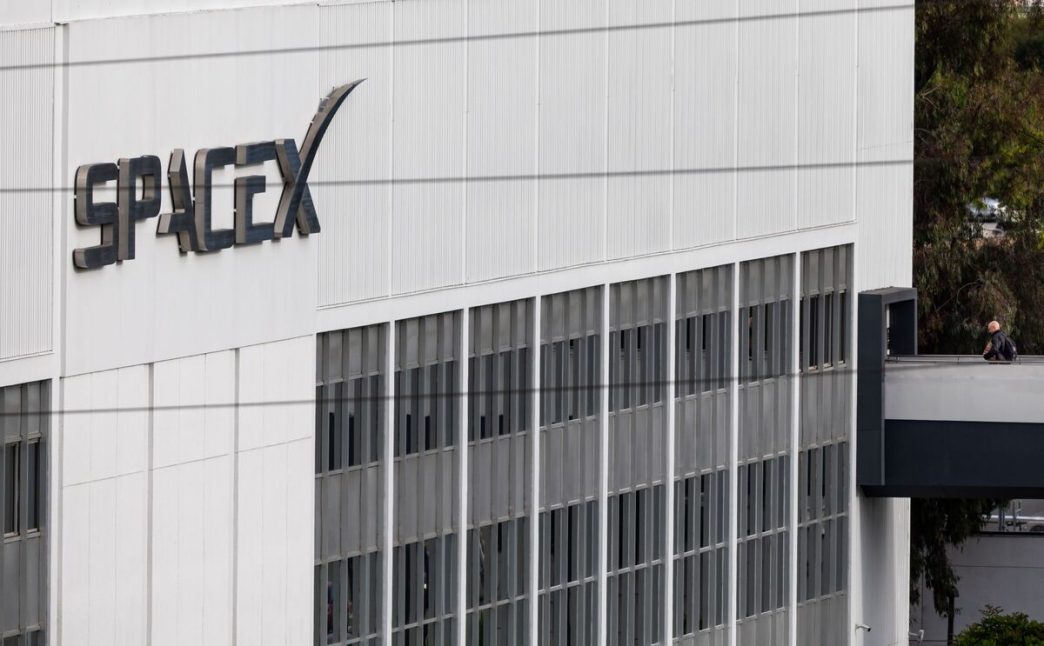
The financial community is closely watching recent developments that suggest SpaceX is moving closer to an initial public offering (IPO), a move that could significantly accelerate its path into various market indices. While a direct timeline remains elusive, the company’s recent strategic maneuvers and ongoing conversations with institutional investors indicate a deliberate progression toward becoming a publicly traded entity. This shift would not only open new avenues for capital but also fundamentally alter its valuation and market perception, potentially placing it alongside established aerospace and technology giants in investor portfolios.
For years, the prospect of a SpaceX IPO has been a subject of intense speculation among investors and industry analysts. Elon Musk, the company’s founder, has previously expressed a preference for keeping the company private for as long as possible, citing the long-term nature of its ambitious projects, such as Mars colonization and Starlink deployment, which do not always align with quarterly earnings pressures. However, as SpaceX’s operations scale and its financial needs grow, the advantages of public financing become increasingly compelling, offering a broader base of capital and enhanced liquidity for early investors and employees.
A key aspect of this anticipated transition involves the criteria for inclusion in major stock market indices like the S&P 500. These indices typically require companies to meet certain benchmarks related to profitability, market capitalization, and public float, among other factors. A faster index inclusion means that once public, SpaceX would almost immediately become a target for passively managed funds and exchange-traded funds (ETFs) that track these indices, guaranteeing a substantial influx of investment capital. This passive demand can provide a stable base for the stock price and enhance its overall market stability, a significant draw for any company considering an IPO.
The mechanisms facilitating this quicker inclusion are often tied to the size and prominence of the offering itself. A large, high-profile IPO from a company like SpaceX, with its immense brand recognition and disruptive technologies, tends to attract immediate institutional interest. This can lead to a rapid accumulation of shares by institutional investors, fulfilling the public float requirements more swiftly than a smaller, less visible offering. Furthermore, the sheer scale of SpaceX’s operations, from its Falcon rockets to its Starlink satellite internet constellation, already places it in a unique position within the global economy, making its eventual public debut a landmark event regardless of the specific timing.
The implications of a public SpaceX extend beyond mere financial metrics. It would offer retail investors a direct stake in a company pushing the boundaries of space exploration and communication, areas previously dominated by government agencies and a select few private entities. This democratization of access to such a visionary company could spark renewed public interest in space technology and inspire a new generation of innovators. Moreover, the increased transparency and regulatory scrutiny that come with being a public company could further solidify SpaceX’s position as a mature and accountable leader in the aerospace sector.
While the specific date for a SpaceX IPO remains unconfirmed, the current trajectory suggests that the company is laying the groundwork for a public market entry that could be both rapid and impactful. The financial world is poised to welcome a new titan, one whose ambitions stretch far beyond Earth’s atmosphere, and whose inclusion in major indices could reshape investment landscapes for years to come. The journey from a private venture to a publicly traded powerhouse is complex, but for SpaceX, the signs point to an accelerating path toward broader market integration.