





The narrative of Wistron, a Taiwanese electronics manufacturer, offers a compelling illustration of how strategic foresight can transform a company’s trajectory, particularly within the volatile technology sector. Eight years ago, Wistron made a pivotal decision to align itself closely with Nvidia, a move that has since paid considerable dividends as artificial intelligence reshapes the computing landscape. This partnership, initiated during a challenging period for Wistron, positioned the company to capitalize on the burgeoning demand for AI infrastructure, moving it from a lower-margin assembler to a critical supplier of advanced server systems.
Wistron’s financial performance reflects this strategic shift dramatically. In 2025, the company reported revenues of $70.2 billion, a figure more than double that of the previous year, with servers accounting for 70% of its total sales. The momentum continued into the first half of 2026, where revenues already reached $55 billion. This surge in performance propelled Wistron an astonishing 298 places up the Fortune Global 500 list, marking the largest jump among all companies featured this year. This remarkable ascent underscores a broader trend: the AI revolution is not solely enriching chipmakers and large language model developers, but also the less visible firms that construct the foundational hardware.
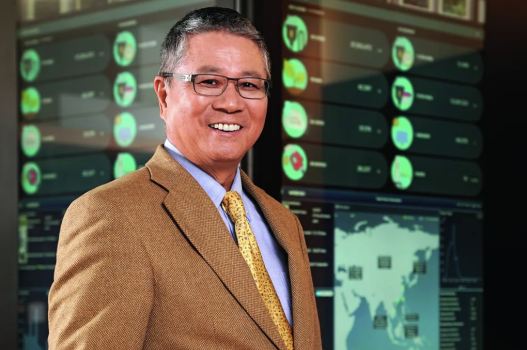
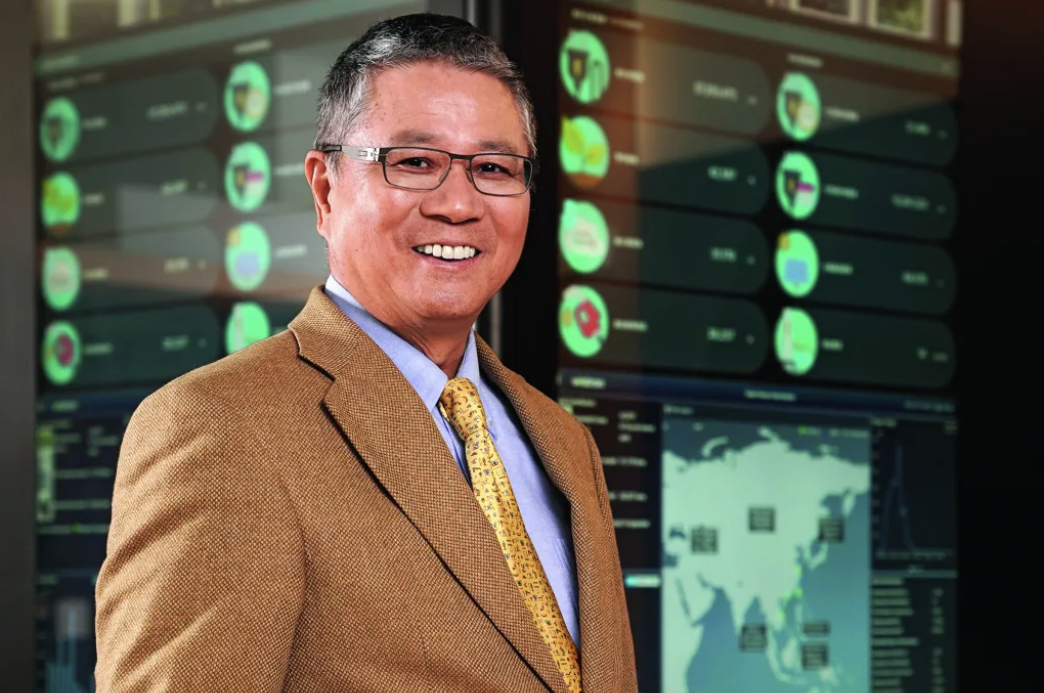
Simon Lin, Wistron’s chairman, who has been a fixture in the computer industry since joining Acer in 1979, has been a key figure in this transformation. Lin is credited with coining the “smiling curve” economic model, which posits that the lowest profit margins reside in manufacturing and assembly, while higher margins are found in design and retail. When Acer spun off its manufacturing division into Wistron in 2001, with Lin at the helm, the new entity found itself squarely in the low-margin middle. For years, Wistron focused on producing PCs for other brands, a segment characterized by commoditization and thin margins. A brief foray into smartphone manufacturing, including setting up an iPhone factory in India in 2017, ultimately proved unsustainable, leading to Wistron’s exit from the business by 2023 due to low margins and labor disputes.
The departure from smartphones, though challenging at the time, inadvertently cleared the path for Wistron to intensify its focus on higher-value opportunities. The company had already been manufacturing graphics cards for Nvidia for nearly a decade, a business that offered better margins than conventional PCs. The true inflection point, however, arrived in late 2022 with the public release of OpenAI’s ChatGPT. The subsequent explosion in demand for Nvidia’s processors, ideally suited for training large language models, meant that Nvidia turned to trusted partners like Wistron to scale up production of increasingly powerful AI servers. These complex systems, often refrigerator-sized racks housing multiple processors, required significant adjustments in Wistron’s operations, from securing new factory space and talent to navigating intricate supply chains.
The rapid evolution of AI technology has introduced unprecedented pressures and opportunities. Lin notes that the typical server generation, once lasting two and a half to three years, has been replaced by annual product cycles, each representing a significant technological leap. To meet the soaring demand, Wistron rapidly expanded its manufacturing footprint. A new 287,000-square-foot server plant in Zhubei, Taiwan, inaugurated last year, was immediately booked to full capacity by Nvidia through 2026, prompting Wistron to lease a nearby textile factory for conversion into additional AI server production. Beyond Asia, Wistron maintains facilities across Vietnam, Malaysia, Mexico, Brazil, the Philippines, and the Czech Republic.
One of Wistron’s most significant recent investments is a pair of facilities near Fort Worth, Texas, totaling 1.09 million square feet, dedicated to assembling Nvidia AI supercomputers. This $761 million investment, made official in August of a prior year, was partly influenced by the threat of a 32% tariff on imports from Taiwan under the Trump administration. While tariffs provided an immediate impetus, the move to the U.S. also offered practical advantages, particularly given the immense weight of AI servers, which can exceed six tons and pose logistical challenges for air or sea transport. Establishing operations in Texas required Wistron to ship equipment from Southeast Asia and train local workers from the ground up, a process Lin described as requiring more time but building a solid foundation. This strategic maneuver, born partly out of necessity, evolved into a rational business decision, demonstrating Wistron’s adaptability in a rapidly changing global economic and political landscape.