





Alisha Jucevic/Bloomberg
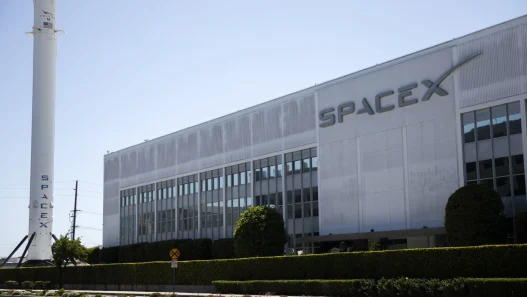
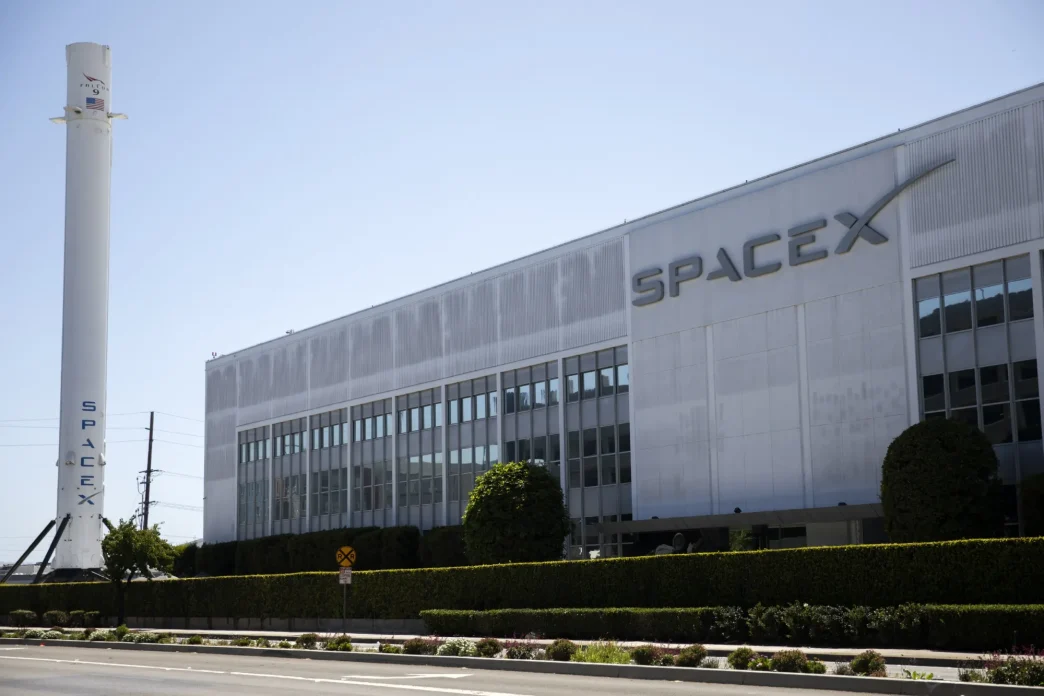
SpaceX has agreed to acquire nationwide low-band spectrum from Grain Management in a deal aimed at turning Starlink Mobile into a full-fledged US wireless carrier, Elon Musk’s company announced Thursday. The news sent shares of the three major incumbent carriers — AT&T, Verizon and T-Mobile — falling as much as 8% in after-hours trading.
Under the agreement, SpaceX will acquire 14 megahertz of paired spectrum in the 800 MHz band, a swath of low-band frequency prized for its ability to penetrate walls and other obstacles that typically degrade wireless signal indoors and in dense urban areas. Musk called it “the last critical piece of the spectrum puzzle needed for SpaceX to provide complete phone coverage in America” in a post on X announcing the deal. Financial terms were not disclosed, and the transaction still requires approval from the Federal Communications Commission.
The spectrum traces back to a separate transaction: Grain Management acquired the 800 MHz block from T-Mobile in a deal first announced in early 2025 and completed this past August, paying $2.9 billion in cash plus additional spectrum licenses. Grain’s resale to SpaceX effectively hands Starlink Mobile the low-band holdings it needs to move beyond outdoor and rural connectivity into reliable indoor coverage — a gap that had kept the service from competing head-on with traditional carriers in dense metro areas.
The deal lands just after the FCC approved SpaceX to deploy up to 15,000 next-generation satellites for its Gen2 Starlink constellation, the backbone of its direct-to-device ambitions. Combined with the new spectrum, SpaceX is positioning itself to offer phone service that works through satellites without requiring a dedicated device — competing directly with the terrestrial networks AT&T, Verizon and T-Mobile have spent decades building out.
The stock reaction underscores how seriously investors are taking the threat. Starlink Mobile has already been expanding direct-to-cell texting and basic connectivity features through partnerships with carriers like T-Mobile, but owning its own nationwide low-band spectrum would let SpaceX offer service independently, rather than relying on a host carrier’s network — a shift that could reshape competitive dynamics across the US wireless industry if the FCC signs off.