








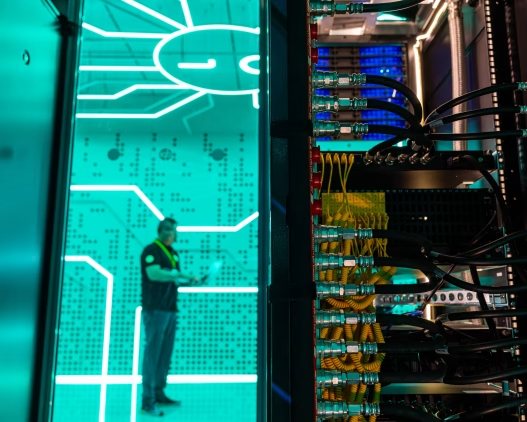
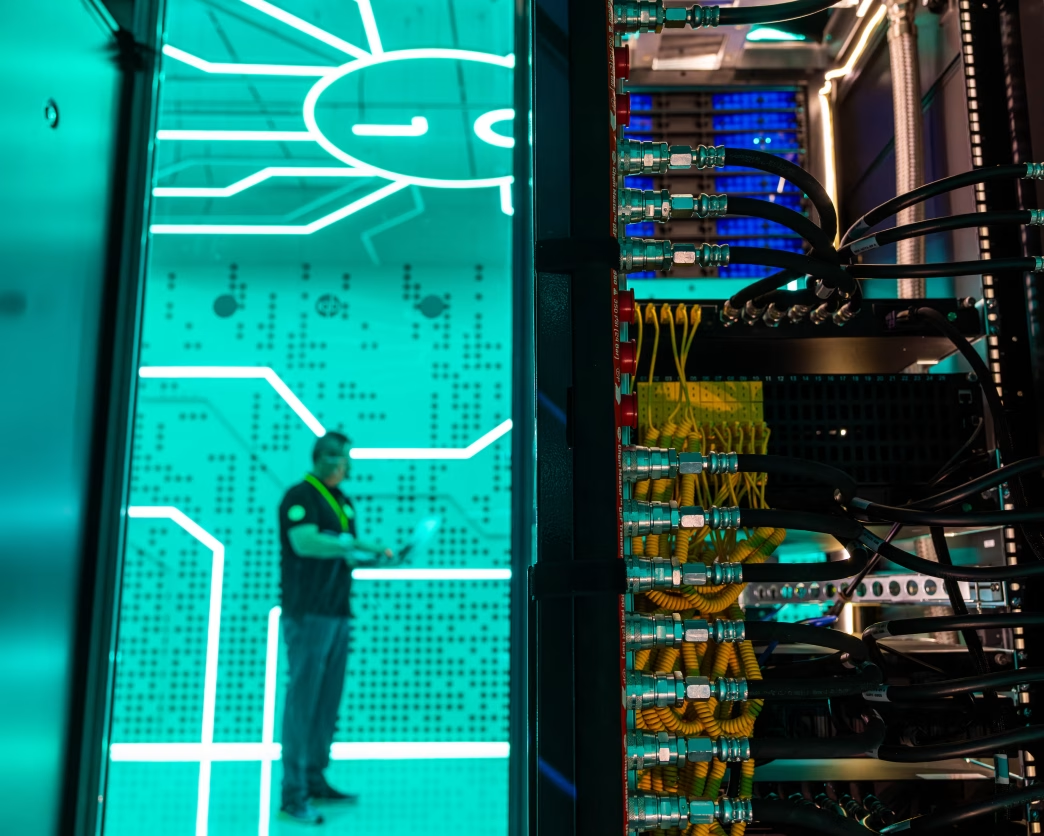
The sheer scale of projected investment in artificial intelligence infrastructure is beginning to reshape long-term economic forecasts, with a recent analysis from PwC indicating that global spending on AI data centers could reach an astonishing $32 trillion by the year 2050. This figure, almost unfathomable in its magnitude, underscores the profound belief among leading analysts that AI is not merely a technological trend but a foundational shift demanding unprecedented capital deployment across the globe. It suggests a future where the digital backbone supporting intelligent systems will necessitate an infrastructure build-out dwarfing many historical industrial revolutions.
This massive financial commitment isn’t merely about constructing new server farms; it encompasses the entire ecosystem required to power, cool, and connect these increasingly complex facilities. From specialized semiconductors and advanced cooling technologies to vast tracts of land and immense power generation capabilities, every component of the data center supply chain stands to see exponential growth. The demand for energy, in particular, poses a significant challenge and opportunity, as AI workloads are notoriously power-hungry. This will inevitably drive innovation in renewable energy sources and more efficient power distribution systems, transforming energy markets in the process. Companies like Nvidia, already a dominant force in AI chip manufacturing, are positioned at the forefront of this expansion, but the ripple effects will extend to utilities, construction firms, and even real estate developers.
The implications of such colossal spending extend far beyond the tech sector itself. Regional economies that successfully attract and foster AI data center development could see significant boosts in employment, local tax revenues, and infrastructure improvements. However, the concentration of these facilities also raises concerns about resource allocation, particularly water consumption for cooling, and the environmental footprint of continuous operation. Governments worldwide are beginning to recognize the strategic importance of this infrastructure, with many exploring incentives and regulatory frameworks to either attract or manage its growth within their borders, balancing economic ambition with environmental stewardship.
PwC’s projection serves as a stark reminder that the AI revolution is as much about physical infrastructure as it is about algorithms and software. The race to build the computational horsepower necessary for advanced AI models, from large language models to complex simulation environments, is creating a new arms race, not for weaponry, but for processing capacity. This competition is unfolding across continents, with nations vying for technological supremacy, understanding that control over AI infrastructure translates directly into economic and geopolitical influence in the decades to come.
Looking towards 2050, the landscape of global commerce and society will undoubtedly be profoundly altered by this wave of investment. The $32 trillion figure represents not just a forecast of spending, but a vision of a future where AI permeates nearly every facet of human endeavor, from healthcare and transportation to finance and entertainment. It implies an economy where data processing becomes a primary commodity and the physical spaces housing these digital brains become critical national assets. The journey to that future will be marked by intense competition, technological breakthroughs, and significant societal adjustments, all driven by the relentless pursuit of intelligent systems.